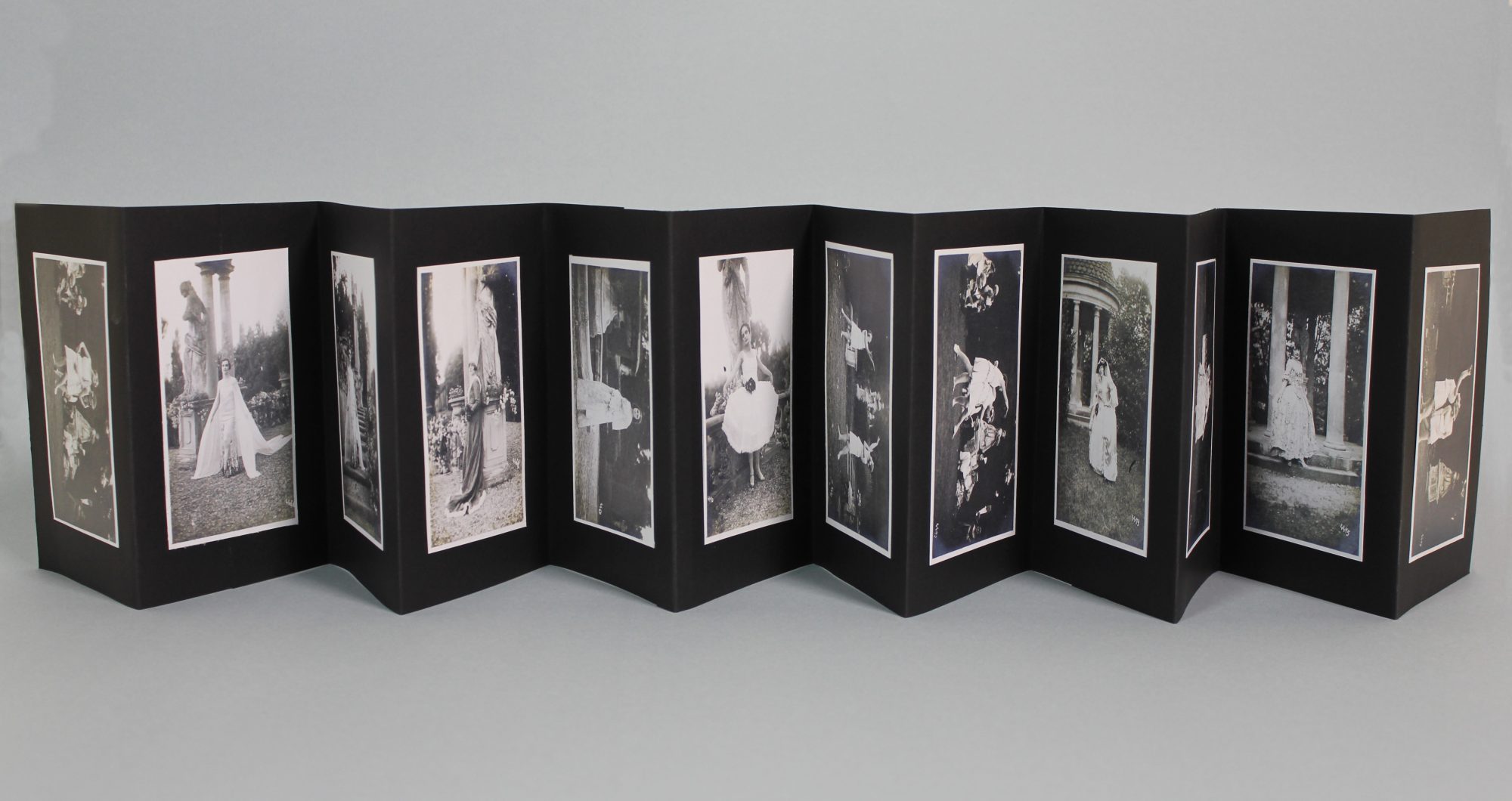
“Florence did not lag behind other cities in fancy-dress entertainments. […] For one party given that year at the Villa Schifanoia, Persian and Venetian costumes were combined: the Shah was sending an embassy to the Doge. My parents went in costumes designed by Poiret from Persian miniatures and my brother, in an overwhelming turban and puffed-out satin trousers designed by Brunelleschi, , acted as a Moorish page to the Doge’s spose.”

Harold Acton, Memoirs of an Aesthete, 37-38.


At Villa La Pietra, the boundaries between reality and theater dissolved under the shimmer of the Tuscan moon and the cypress trees. The Teatrino di Verzura (the garden theatre) served as a true source of inspiration for the Acton Mitchell family, whose passion for collecting and cosmopolitan socializing transformed their Florentine estate into a continuous performance.

To understand this taste for theater, one must start by exploring the garden terraces and fountains, observing the art collection curated in an intertwined, aesthetic mode, and examining the library and photo collection. Among these treasures are unique illustrated books alongside the “Baby Books” of the Acton children, Harold (born 1904) and William (born 1906).

These albums contain numerous photographs of the boys in extraordinary costumes, alongside clippings of their favorite artists and movements—ranging from Sandro Botticelli and Aubrey Beardsley to Léon Bakst of the Ballets Russes. In particular, their imagination was fueled by the visual grammar of Umberto Brunelleschi (1879–1949), a refined Tuscan illustrator internationally admired for his costume and stage designs and pochoir stencils. A close family friend, Brunelleschi even created personalized bookplates for the young boys.

— Francesca Baldry

Deco Enchantments: Between Parties and Tableaux Vivants

Society Staging – The 1914 Schifanoia Ball and Un po’ di colore (1915)

This section highlights tableaux vivants (“living pictures” or quadri viventi), where costumed guests transformed themselves into living works of art.

One notable event took place in March 1914 at Villa Schifanoia (Fiesole), hosted by the American diplomat and historian Lewis Einstein alongside his wife, Hélène Ralli. Mr. and Mrs. Acton along with their young son William participated in a grand Persian-Venetian gala, wearing exquisite costumes designed by the ‘King of Fashion,’ Paul Poiret (1879-1944). Large photographs on display by society photographer Mario Nunes Vais (1856-1932) depict the encounter of the two royal courts parade as well as the guests’ elaborate costumes. Countess Francesca Notarbartolo D’Orsay—a Sicilian family friend, cousin of Franca Florio, mentor to little Harold, and confidante of poet Gabriele D’Annunzio—described the Schifanoia party in meticulous detail in her 1926 diary, Ce que je peux écrire. Although most original costumes have been lost due to their fragility, the 1913–14 evening gown by Callot Soeurs—designed for Hortense Mitchell for another gathering—offers a rare glimpse into the era’s exquisite craftsmanship. The costume worn by Arthur Acton for this Ball is preserved today in the collection of The Kyoto Costume Institute. 

In March 1915, just before Italy entered World War I, the performance Un po’ di colore (“A Little Bit of Color”), written by Vincenzo Sorelli with costumes and sets by Umberto Brunelleschi, at the Teatro della Pergola served as a final, joyful gathering of the Florentine elite. Combining artistic playfulness with civic engagement for the Red Cross, the event featured Hortense wearing the spectacular “Mannequin Cinese” costume—a special loan featured on display from the Museo Civico “Don Giovanni Guiso” in Orosei (Sardinia), specially restored for this exhibition—and William as “Un Morettino,” wearing part of the same outfit from the 1914 Schifanoia ball. From the article in “Sirena” and from the detailed program of the performance, a recent gift from Harold’s friend Giuseppe Chigiotti we find out that other dear family friends joined the spectacle: Mario Pansa portrayed “Lo Chic”, the marchesa Nancy Cappelli as a D’Annunzio character “La Pisanella”, and muse Cora Antinori, personified “La Moda” with a parasol and a wonderful green and blue dress with ruffles. Cora, often portrayed in family photos, was depicted by both Alfred Muller and Arthur Acton in the garden’s Seconda Vasca, a painting recently brought to life from storage and on display for this exhibition.

— Francesca Baldry

The 1914 Schifanoia Ball

Un po’ di colore (1915)

Fantasia Notturna – The 1927 Teatrino Performance

The pinnacle of this aesthetic universe occurred on May 28, 1927, with the performance of Fantasia Notturna (“Night Fantasy”). Conceived by Lanza del Vasto and featuring legendary costumes by Gino Carlo Sensani, the garden’s open-air Teatrino di Verzura became a timeless sanctuary. Here, the Florentine aristocracy staged an “escape from reality,” dancing among the stage’s natural boxwood wings to live jazz under the glowing electric footlights. The performance bridged historical fascination—spanning ancient Greece to the Orient—with the pulsating modernity of the Roaring Twenties. Famous ballerinas like the sisters Yartseff, heirs of the divine Isadora Duncan, contributed to the modern rhythm of the performance.

— Francesca Baldry

Fantasia Notturna – The 1927 Teatrino Performance