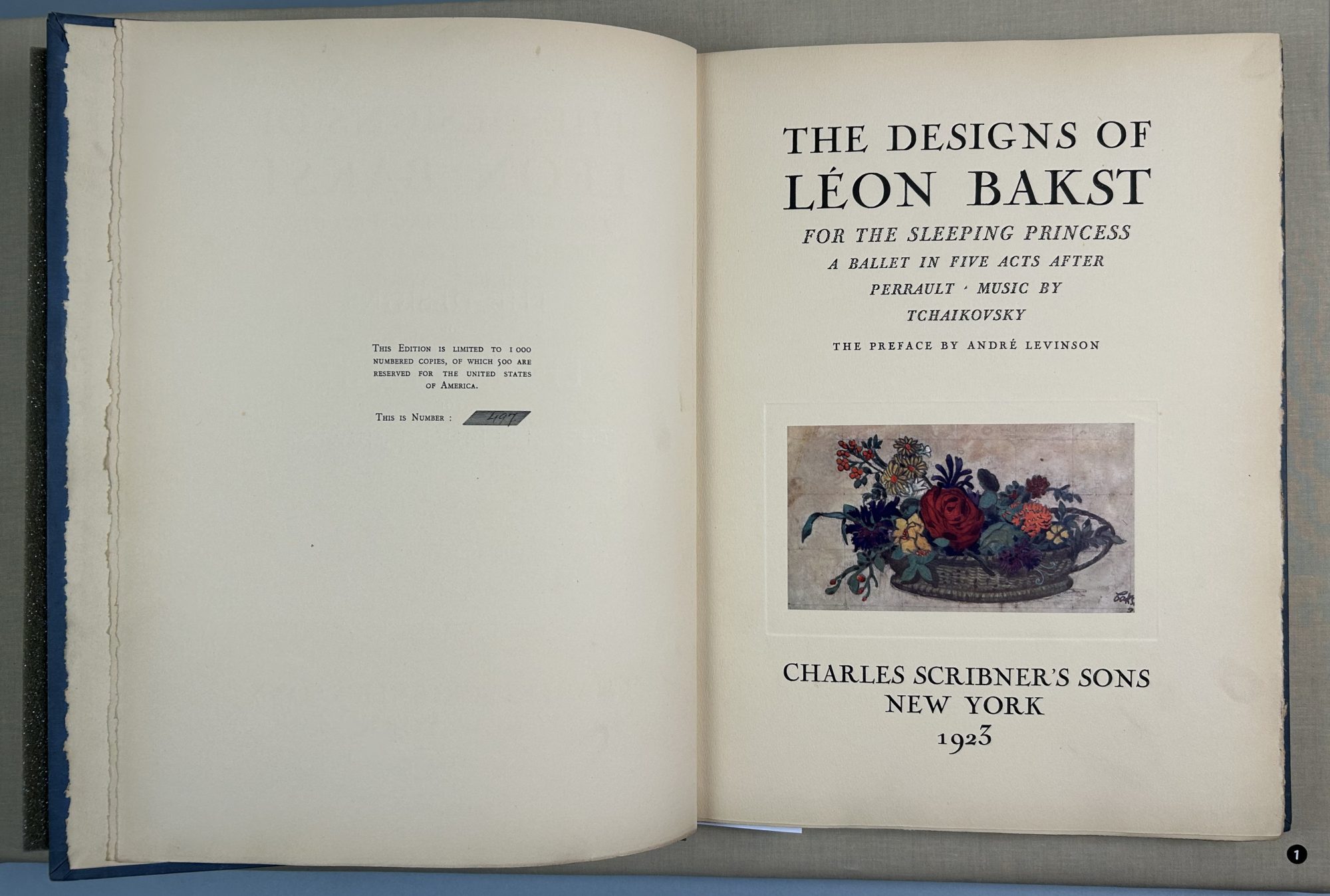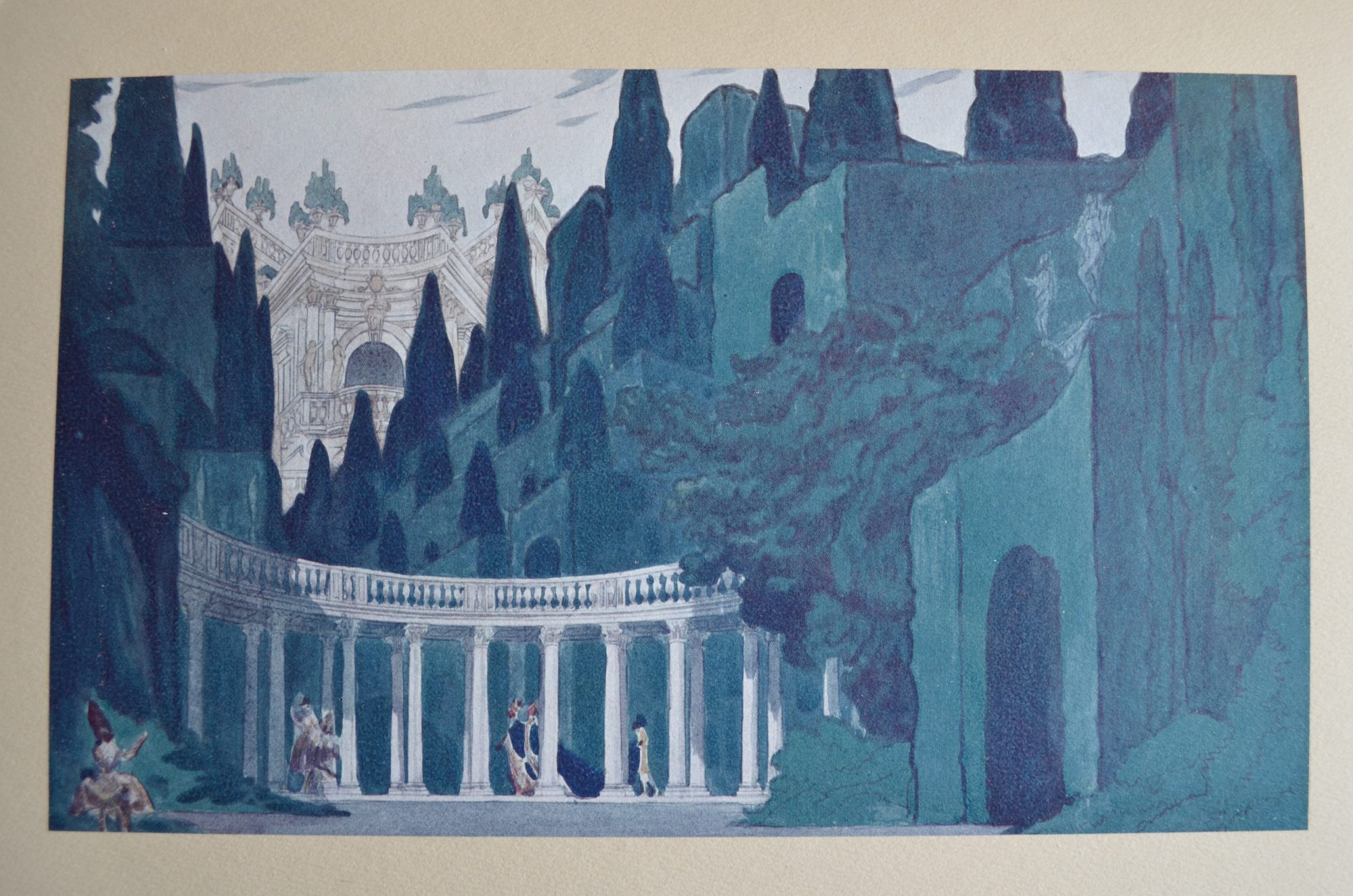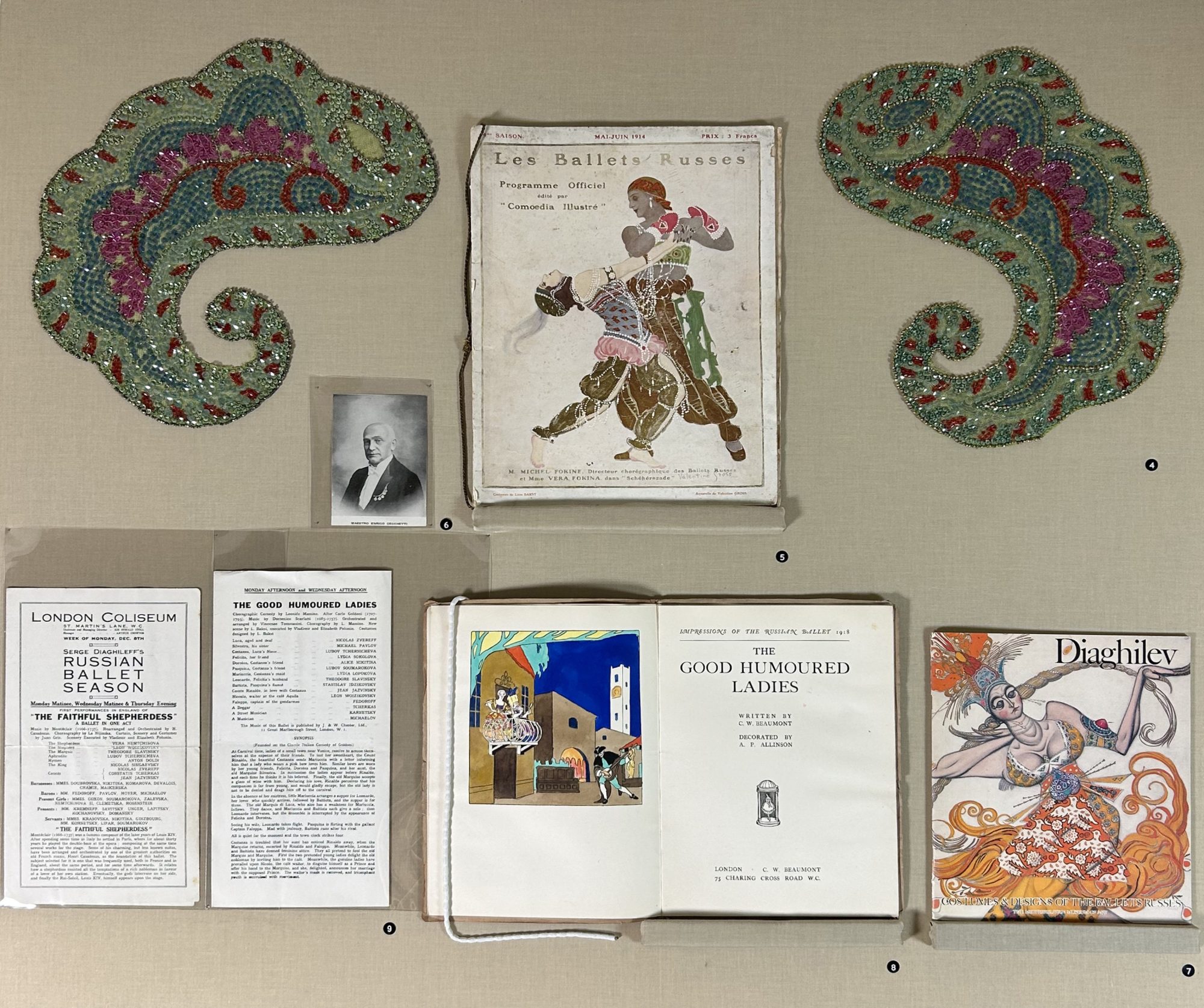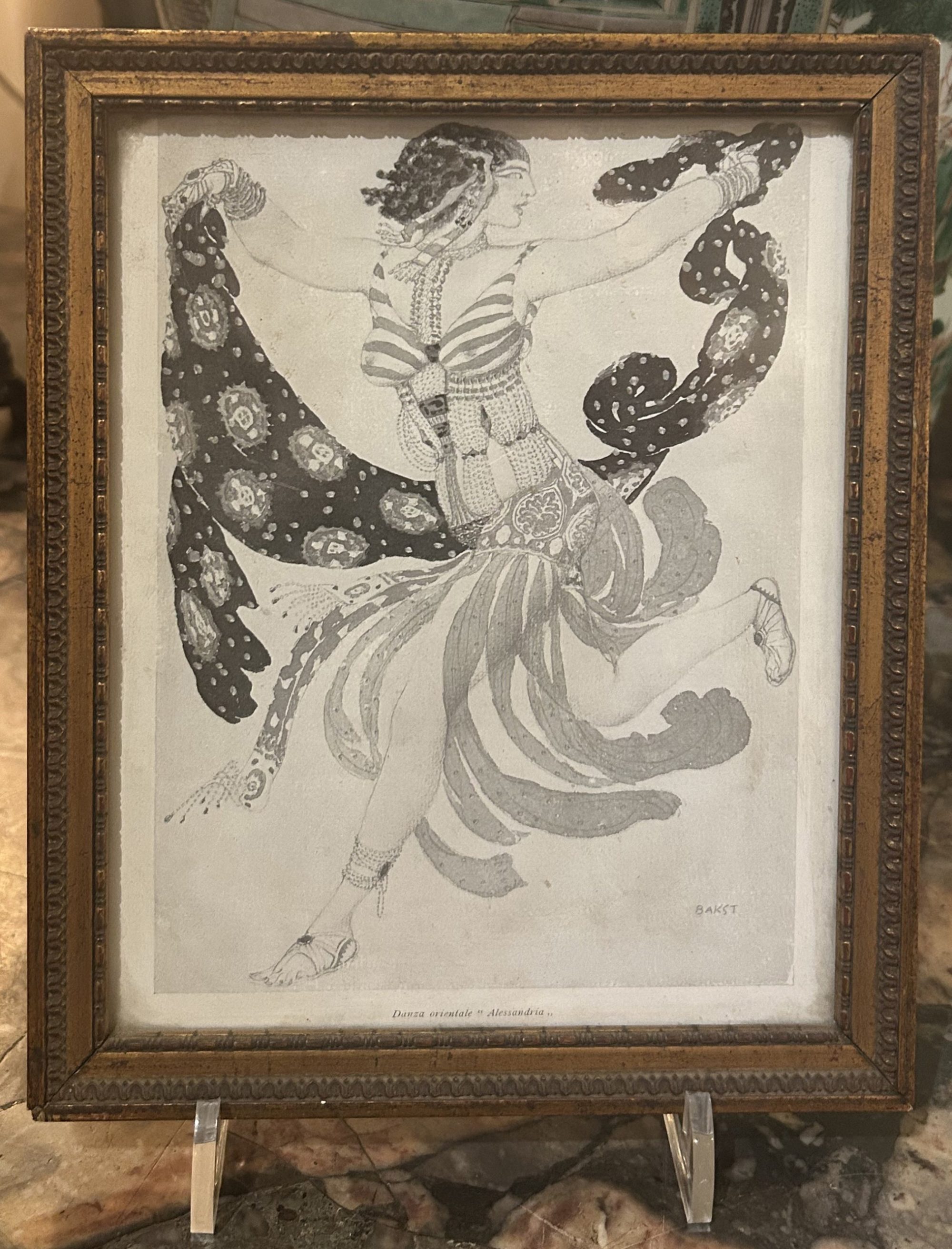
“The Russian Ballet was to be seen in London. […] At Eton it was tantalizing to be so near and yet so far from it. I followed every performance from a distance, and cut out every picture I could found. […] Could anything on any stage be more beautiful? […] As my first ballet after the war, Prince Igor struck me as historically significant. It was a microcosmic image of the immediate aftermath of the war conflict, except that ‘microcosmic’ suggests smallness and there was nothing small about these passions.”
— Harold Acton, Memoirs of an Aesthete, 85-86
The materials presented in this section center on Harold Acton’s lifelong aesthetic appreciation of the Ballet Russes. Under the direction of Sergei Diaghilev (1872-1929), the Ballet Russes was one of the most transformative cultural forces of the twentieth century and redefined the boundaries of what art could be through avant-garde performances and innovative dance techniques (V&A 2024). Political and historical developments in late Imperial Russia set the backdrop for the intersection of Italian identity and larger, international artistic developments of the period (Litivenko n.d.).
Sergei Diaghilev’s early collaborations with Alexander Benois (1870-1960) and Leon Bakst (1866-1924) — who would later become costume designers for the Ballet Russes — through the Mir Isskustva (World of Art) movement were foundational to the creation of the dance company (Columbia University 2026). In 1905, the Russian Empire suffered a crushing defeat in the Russo-Japanese War (Department Of State 2007). The empire became dependent on financial loans from France as the war had nearly depleted the Imperial Treasury (National Gallery of Art 2025). Seeking to improve diplomatic relations after their loss, Tsar Nicholas II turned westward and provided government support for a series of cultural programs in Paris (Velikaya and Slokvenko 2021). Diaghilev, acting as an official representative of the Empire, organized a series for the Salon d’Automne (an avant-garde art exhibition ) at the Grand Palais in Paris that resonated with French cultural tastes (Christiansen 2022). Audiences were fascinated with the depiction of Russian culture as exotic, primal, and richly ornamental — a characterization that Diaghilev would amplify in the aesthetics of the company’s later ballets (Ulmer 2008).
The relationship (or rather, competition) between the Italian and Russian schools of ballet was put to the test in March of 1911. After the departure of premier dancer Vaslav Njinsky (1889-1950) from the Russian Imperial Ballet in order to work with Sergei Diaghilev, the Ballet Russes began their company tours across Europe (Njinsky 1933). When making their first appearance in Rome, dancers were particularly concerned about their Italian reception. Enrico Cecchetti (1850-1928) — the most famed ballet choreographer in the world, otherwise known as il Maestro — had once said that dancers in the Russian Ballet “danced like ducks” (Njinsky 1933). Despite his comments, Cecchetti was impressed with the physical capabilities of the Russians as he joined the Ballet Russes as an instructor from 1910 to 1918 (Britannica 2025). The performance in Rome was a fantastic success, solidifying the Ballet Russes as a formidable competitor for the Italian ballet’s traditional style.
Villa La Pietra emerges as a unique cultural center for the exchange of local and global artistic activity in this period. In his memoirs, Harold Acton recalls a visit to the villa by Diaghilev and Bakst when he was twelve years old (Acton 1948, 57). This visit underscores the significance of Villa La Pietra as a hub of avante-garde experimentation and strongly influenced Harold’s lifelong appreciation for the ballet company. Florence was in fact an important site for experimental ballet in the early 20th century, attracting companies and dancers from abroad. In 1917, the Ballet Russes performed at the Teatro Regio Politeama (Veroli and Vinay 2013). Many of Florence’s important socialites were in attendance. The ballet featured performances of Le Selfidi, Sol di Notte, Le Donne di Buon Umore, Il Principe Igor, and La Principessa Incantata.
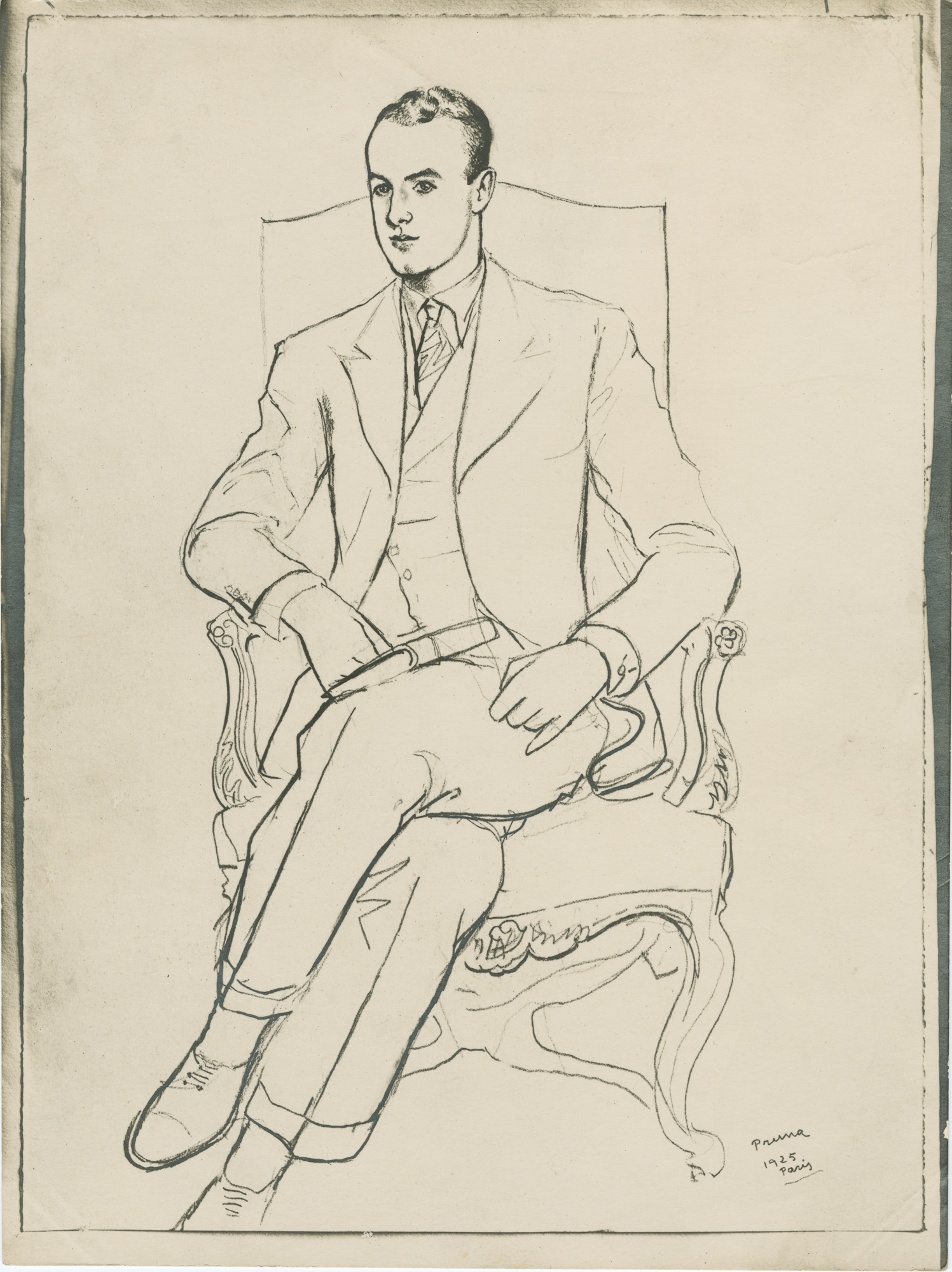
Harold Acton’s infatuation with the Ballet Russes did not end with Diaghilev’s and Bakst’s visit to the villa. Other prominent figures of the dance company became a part of Harold Acton’s Parisian circle in 1925, such as Pere Pruna (1904–1977), protégé of Picasso, as well as a costume designer for iconic ballets like Les Matelots (1925) (V&A 2012). The collection features a portrait of Harold Acton as a young man while in Paris by Pruna. These friendships encouraged Acton to immerse himself in the world of the Ballet Russes dance company through its final season in 1929 (Acton 1948, 221).
Throughout his adolescence and into his young adult years, Acton engaged in the sustained collection and documentation of the Ballet Russes’s performances. The preservation of dance programs, playbills, reviews, and clippings give insight into his deep appreciation for this experimental style of dance. Through the lens of Harold Acton and Villa La Pietra, the Ballet Russes can be understood as a catalyst for artistic innovation in both art and dance in Florence and on the global stage.
— Anna Detke